

What are the best parks and nature spots in Burlington and nearby towns?
The nature spots in Burlington and the towns around it, Woburn, Billerica, and Wilmington, offer far more open space than most people expect from a Route 128 suburb. The standout is Mary Cummings Park, a 216-acre property managed by The Trustees of Reservations that spans the Burlington-Woburn border. Beyond that, you'll find wetland trails, conservation forests, and quiet meadows within a short drive of nearly every neighborhood we work in.
Key Takeaways
- Mary Cummings Park covers 216 acres across the Burlington-Woburn border, with woodland trails, wildflower meadows, wetlands, and a wheelchair-accessible 0.8-mile Pollinator Trail loop.
- The park's Pollinator Trail is accessible from the Blanchard Road entrance and the Burlington multipurpose-field parking lot, making it one of the most reachable green spaces in the area.
- Woburn's Aberjona Nature Trail on Rifle Range Road offers a smaller, wetland-focused setting designed for passive recreation and outdoor education.
- Billerica publishes official conservation and recreation brochures for properties including Billerica State Forest and Gilson Hill, the best first stop for current trail maps and access details.
- Manning State Forest in Billerica adds several hundred acres of DCR-managed woodland to the area's trail inventory. Check the MassWildlife or DCR site for current access and parking details before visiting.
- Horn Pond in Woburn is one of the most popular local destinations in the region, with a loop trail around the water, fishing access, and a boat launch managed by the City of Woburn.
- Mill Pond Reservoir sits near the Burlington, Woburn, and Wilmington borders and offers quiet waterside walking in a setting that, like Mary Cummings Park, doesn't belong to any single town.
- Access to green space is one of the quality-of-life factors buyers consistently mention when they ask us why they're drawn to Burlington and the surrounding towns.
What nature spots in Burlington and Woburn are worth knowing about?
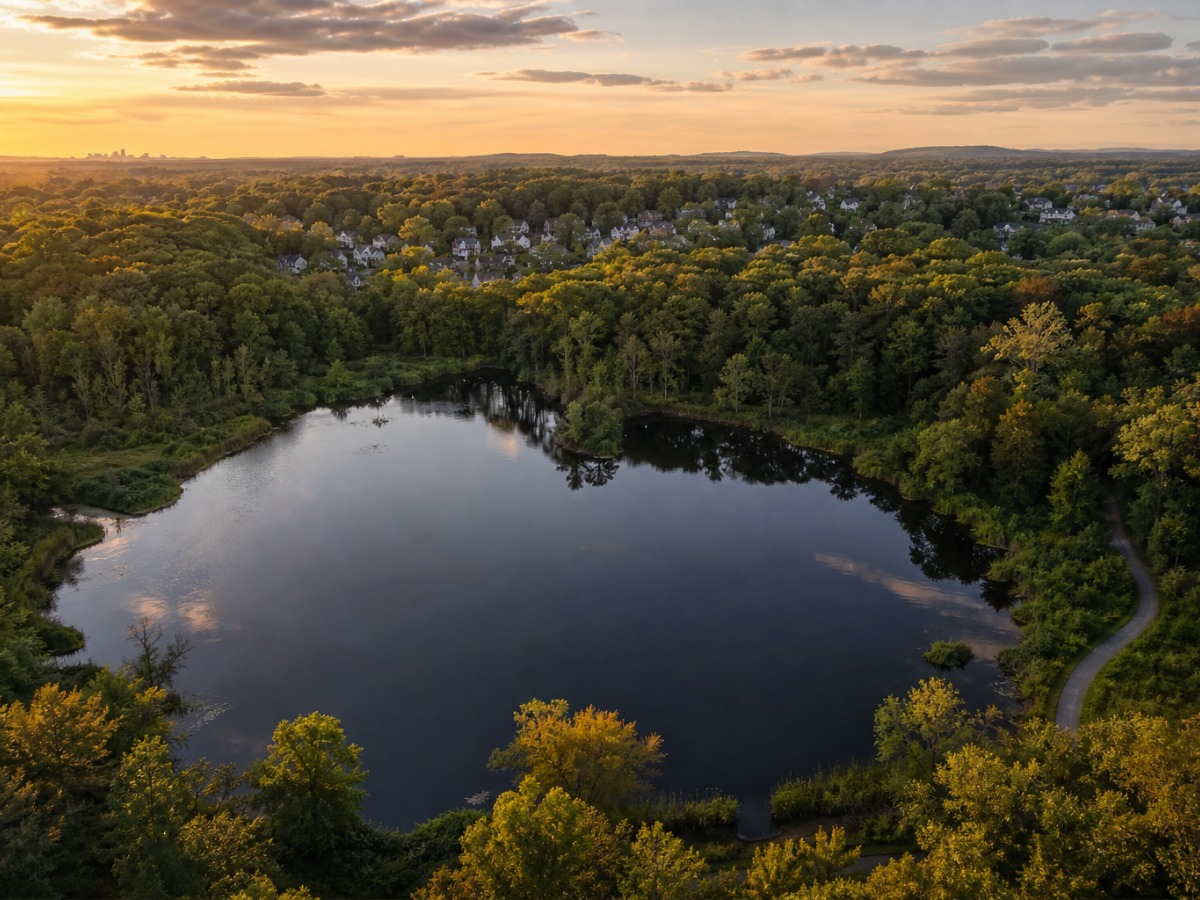
The single biggest green-space asset shared by Burlington and Woburn is Mary Cummings Park. At 216 acres, it doesn't feel like a town park, it feels like a small nature preserve. The habitat mix is genuinely diverse: forest, open fields, wildflower meadows, wetlands, marshland, bridges, and boardwalks. That variety makes it worth visiting in every season, and it draws birdwatchers, walkers, and families who want something more than a manicured lawn.
One feature we hear about a lot from clients with young kids or mobility considerations: the Pollinator Trail, a 0.8-mile accessible loop that runs through meadow and wildflower habitat. It's reachable from the Blanchard Road entrance or the Burlington multipurpose-field parking lot, so parking is rarely an issue. For a longer, more rugged walk, the park's woodland trails extend well beyond that loop into the forested interior.
Because the park sits on the Burlington-Woburn border, residents of both towns claim it, and rightfully so. It's a good example of why municipal boundaries matter less than you'd think when you're evaluating a neighborhood's access to open space.
That same cross-border quality applies to Mill Pond Reservoir, a quieter destination that sits near the Burlington, Woburn, and Wilmington lines. It doesn't have the trail mileage of Mary Cummings, but it offers waterside walking in a genuinely peaceful setting, and it's the kind of spot that residents in all three towns tend to discover and keep coming back to.
Woburn's Aberjona Nature Trail and Horn Pond
For something smaller and more focused, Woburn's Aberjona Nature Trail on Rifle Range Road (approached from Salem Street) offers a quiet wetland setting built around passive recreation and outdoor education. It's a different experience from Mary Cummings, less expansive, more intimate, and it's a good option when you want a shorter outing without driving far.
Horn Pond is Woburn's most popular outdoor destination and worth calling out on its own. The pond has a loop trail around the water, fishing access, and a boat launch, all managed by the City of Woburn. It draws a steady crowd of walkers, joggers, and families throughout the year, and it's the kind of amenity that buyers who are new to Woburn are often surprised to find so close to Route 128.
What conservation areas are available in Billerica and the surrounding region?
Billerica has a meaningful inventory of conservation and recreation land, and the town makes it easy to explore. The Town of Billerica's official brochure page publishes maps and access details for its properties, including Billerica State Forest and Gilson Hill. If you're planning a visit or researching the area before a move, that's the right place to start, the brochures are updated by the town and reflect current rules and trail conditions.
Billerica State Forest is the kind of destination that surprises people who think of this corridor as purely suburban. There's enough trail mileage to make it worth a dedicated trip, and the terrain suits both casual walkers and more serious hikers. Gilson Hill adds a different character, elevation changes and views that feel a long way from Route 3.
Manning State Forest is another significant piece of the picture. It's a DCR-managed property with several hundred acres of woodland open for hiking, mountain biking, and horseback riding. Trail access and parking details are best confirmed through the Massachusetts DCR site before you go, since conditions and posted rules can change seasonally.
For anyone considering a home in Billerica, this kind of conservation land is a real part of the value proposition. We work in Billerica regularly, and access to open space comes up in buyer conversations more often than you might expect.
A note on Wilmington
Wilmington has its own conservation areas and recreational properties. For the most current trail maps, parking details, and access rules, the best source is the Town of Wilmington's official website. Town conservation pages are updated more reliably than third-party listings, and rules around dogs, bikes, and hours can change, so it's worth checking directly before you go.
How does access to nature spots affect home values in Burlington and nearby towns?
Proximity to parks and conservation land is one of those quality-of-life factors that shows up quietly in home values. Buyers who prioritize walkability to green space, trail access, or a backyard that backs to conservation land will pay a premium for it, and in a market like Burlington's, that premium is real. When buyers ask us about the nature spots in Burlington specifically, the conversation almost always turns to what those amenities mean for long-term value.
Recent local market data puts the median sale price in Burlington at $900,000, with homes selling in a median of 61 days. That's the area-level picture; an individual home's value depends on condition, street, lot, and timing. But the broader point holds: towns with genuine open-space amenities attract buyers who are willing to compete for them.
Here's a quick look at how the towns we cover compare on recent sales data:
| Area | Median Sale Price | Median Days on Market |
|---|---|---|
| Burlington | $900,000 | 61 |
| Billerica | $715,000 | 50 |
| Woburn | $750,000 | 50 |
| Wilmington | $755,500 | 62 |
| Chelmsford | $650,000 | 47 |
| Reading | $947,500 | 62 |
| Stoneham | $822,500 | 48 |
| Wakefield | $780,000 | 47 |
These are aggregated public listing figures for the trailing 90 days as of September 2026. They give you a sense of the range across towns, but your specific home's value depends on far more than the area median. If you want to understand what a particular property near a conservation area or park is actually worth, that's a conversation worth having with someone who knows these streets.
If you're curious about how Burlington's broader amenity picture, including its commercial corridor, factors into home values, we wrote about that in our post on how Burlington Mall affects home values and our piece on whether living near 3rd Ave Burlington increases your home value. The short answer in both cases: location within the town matters, and open space is part of that equation.
We live in Burlington ourselves, so this isn't abstract for us. Our son has grown up exploring these trails, and our Olde English Bulldog has strong opinions about which ones have the best smells. When buyers ask us what it's actually like to live here, the parks come up every time.
If you'd like to know what your home near one of these nature spots is worth, get a free home valuation here, or download our free Seller's Guide if you're thinking about making a move.
You're welcome to read what our clients say about working with us on Google, Zillow, and Realtor.com.
Frequently Asked Questions
Is Mary Cummings Park in Burlington or Woburn?
Mary Cummings Park spans both towns, it sits on the Burlington-Woburn border and is managed by The Trustees of Reservations. At 216 acres, it's large enough that you can enter from either side and spend hours without retracing your steps. Residents of both towns use it regularly, and it's one of the clearest examples of a conservation resource that doesn't respect municipal lines.
How long is the accessible trail at Mary Cummings Park?
The Pollinator Trail at Mary Cummings Park is a 0.8-mile loop and is described by The Trustees as wheelchair accessible. It runs through meadow and wildflower habitat and can be reached from the Blanchard Road entrance or the Burlington multipurpose-field parking lot. For visitors who want a longer outing, the park's woodland trails extend well beyond that loop.
What nature trails are available in Woburn?
Woburn's Aberjona Nature Trail on Rifle Range Road is the town's dedicated conservation trail, focused on a diverse wetland environment and designed for passive recreation and outdoor education. Woburn residents also have easy access to Mary Cummings Park, which sits on the Burlington-Woburn border and offers a much larger trail network through forest, meadow, and marsh.
Are there places to explore conservation land near Billerica?
Billerica has its own conservation and recreation properties, including Billerica State Forest, Gilson Hill, and Manning State Forest. The Town of Billerica's official brochure page is the best place to get current maps and access details for town-managed properties. For Manning State Forest, which is managed by the Massachusetts DCR, check the DCR site directly for trail conditions and parking. Both sources are updated more reliably than third-party listings.
Does living near a park or conservation area affect home value in Burlington?
Proximity to open space is a real factor in buyer decisions, and homes that back to conservation land or sit within walking distance of a park often attract stronger interest. The area-level median sale price in Burlington is $900,000 based on recent local market data, but an individual home's value depends on its specific location, condition, and the features buyers are competing for. If you want to know what your home near one of the nature spots in Burlington is actually worth, a local market analysis will give you a much clearer picture than any area average.
Equal Housing Opportunity. Vicky Kustov, Real Estate Sales. Each office is independently owned and operated. This article is provided for general informational purposes only and does not constitute legal, tax, or financial advice. Readers should confirm their own numbers and circumstances with a licensed real estate attorney, tax advisor, or lender.