Categories
Home Selling TipsDoes a busy road affect home value in Burlington and nearby towns?
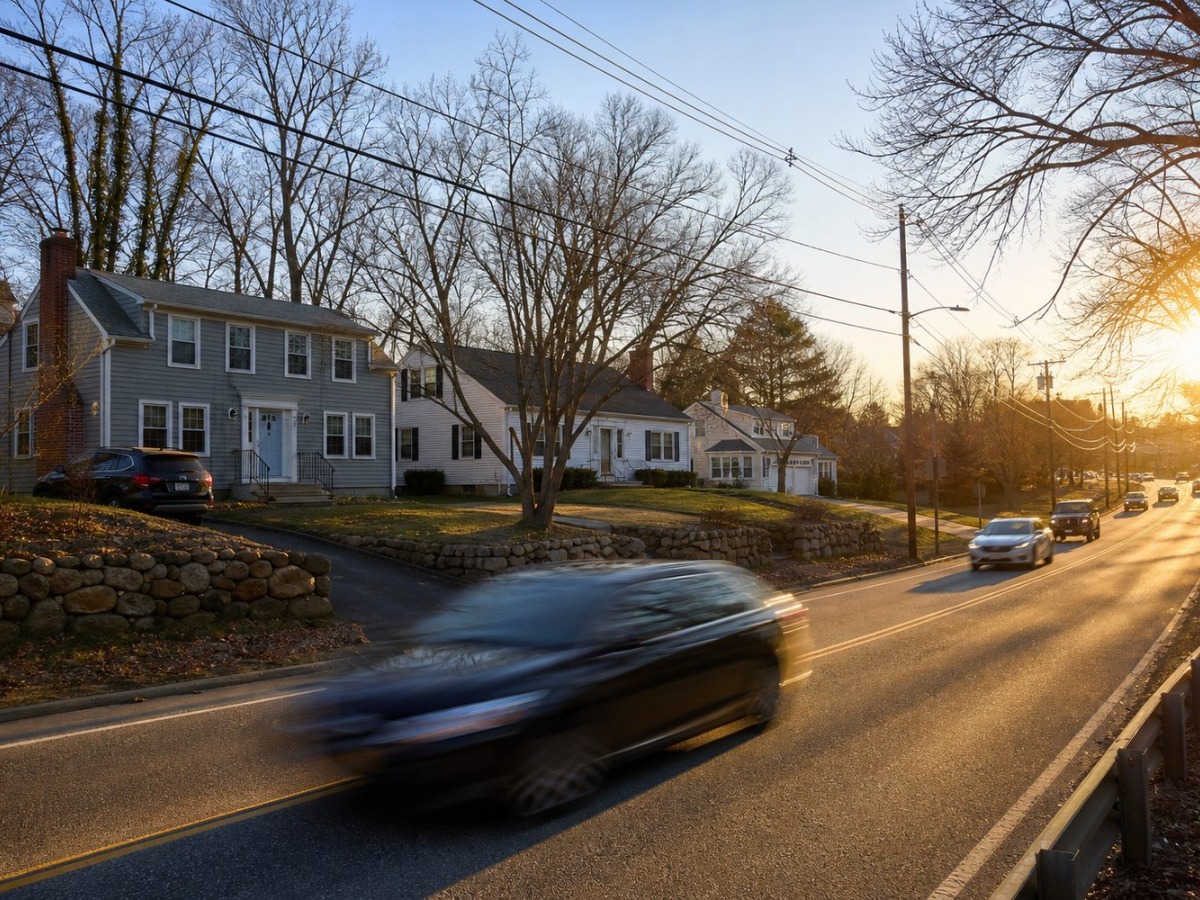
Yes, a busy road can affect home value in Burlington, Billerica, Wilmington, and Woburn, but there is no reliable flat discount you can apply. The effect depends on how the house sits to the road, what kind of traffic uses it, and how usable the lot still is, so the only honest number comes from matched comparable sales. Recent local market data puts Burlington's median at $899,572 for all home types sold July–September 2026, which is exactly why a town median can't tell you what one road-facing house is worth.
Key Takeaways
- Burlington's median sale price was $899,572 for all home types sold July–September 2026, so a town-wide number says very little about a single house on a busy road.
- No verified, defensible percentage exists for busy-road exposure in Burlington, Billerica, Wilmington, or Woburn, so anyone quoting a fixed discount is guessing.
- Closed sales are the strongest evidence of value, pending listings show what buyers just accepted, and active listings show your direct competition.
- Burlington had 3.0 months of supply in July–September 2026 (all home types), up from 1.6 a year earlier, so buyers have more choice and more room to compare a road-facing home with a quieter one.
- Buyers should visit at morning and evening commute times and stand in the yard and bedrooms before deciding what the road is really worth to them.
What counts as a busy road, and why is there no standard discount?
A busy road is not one condition, so there is no standard discount to apply. A house that faces the road, one that backs onto it, and one near a signalized intersection all feel different, and buyers react to each differently.
The honest answer to how much a busy road will affect home value in Burlington starts with the specific house, not the street name. Here's how the common situations break down.
| Road exposure | What changes for the buyer | What to match in comps |
|---|---|---|
| Front-facing | Noise at the entrance, driveway backing out, street parking | Homes facing a road with similar traffic and driveway layout |
| Rear-abutting | Loss of backyard privacy and usable outdoor space | Homes whose yards back onto a road, with or without a buffer |
| Corner or intersection | Headlights, idling, stop-and-go noise, two sides exposed | Corner lots near a signal or turning traffic |
| Visible but set back | Distant sound, little daily impact | Homes with similar distance, trees, or fencing |
Truck volume, bus routes, and nighttime activity matter too. Two roads with the same posted name can behave very differently one block apart.
Is being near a major road always a negative?
No. In the Route 128/I-95 corridor, quick access to highways and employment centers is a real draw, and that's accessibility value. Direct exposure to the roadway is a separate thing: privacy, outdoor use, and noise. The same road that shortens a commute can shrink a backyard, and we weigh those two effects separately. Our look at how Route 128 hiring shapes the Burlington and Woburn market shows why proximity helps demand even when a particular lot has drawbacks.
Why can't you use the town median as your yardstick?
Because town medians span every style, size, and condition. Here is how far apart the area-level medians sit across our core towns.
| Area | Median Sale Price | Homes Sold |
|---|---|---|
| Burlington | $899,572 | 58 |
| Billerica | $709,662 | 114 |
| Woburn | $754,641 | 106 |
| Wilmington | $774,631 | 69 |
| Chelmsford | $662,684 | 113 |
| Reading | $955,545 | 81 |
| Stoneham | $819,610 | 72 |
| Wakefield | $792,123 | 77 |
These are area-level medians. An individual home's value depends on condition, street, build year, and timing. If you're weighing towns against each other, our budget comparisons for Burlington versus Billerica and Burlington versus Wilmington are a better starting point than a single median.
How should sellers use active, pending, and sold listings to price a busy-road home?
Start with sold listings, then use pending and active listings to see where buyers are right now. Closed sales show achieved value, pending listings show the price points that just attracted accepted offers, and active listings show who you're competing against. Active and pending homes shouldn't be treated like closed sales, because their final prices and concessions aren't known yet.
This is the workflow we walk our sellers through:
- Pull recent closed sales in your town with a similar size, lot, age, condition, and parking, then narrow to homes with a similar relationship to the road.
- Check pending listings to see which price points are drawing offers.
- Review active listings, including quieter streets at a similar price, because those are the alternatives your buyer is also touring.
- Adjust for the road qualitatively: fencing, mature trees, setback, usable yard, and driveway layout all move the needle.
- Reassess after showings. Showing traffic, offer quality, and days on market tell you more than any preset discount.
What does the Burlington market data say about pricing pressure?
Recent local market data for all home types sold July–September 2026 in Burlington shows a median sale price per square foot of $432 and an average sale price of 102.5% of list price (101.0% a year earlier). Fifty-four percent of those homes sold above list and 32% below. The median time from listing to going under contract was 13 days, and 53% of homes went under contract within two weeks.
The other side of the picture matters just as much for a road-exposed home. In the same window, 30% of Burlington listings had a price cut, averaging 4.0%, and months of supply rose to 3.0 from 1.6. Homes for sale now in Burlington total 39 active listings, with 12 new in the last 30 days. Those are all-home-type figures, so a house with road exposure can behave differently from the town pattern.
That's why we price a road-facing home from the evidence on day one rather than start high and chase the market down with cuts. A buyer comparing your house to a quieter one on the next street will notice the difference quickly. Your specific number depends on your home's condition, location, and the exact comps, and that's where a local market analysis comes in. If your street sits near the retail corridor, our piece on how Burlington Mall affects home values covers a related traffic question.
What should buyers check before buying a house on a busy road?
Visit at commute hours and at night, and test the yard and bedrooms with windows open and closed. A showing at 11 a.m. on a quiet weekday tells you very little about daily life on that street.
- Morning and evening commutes: stand outside for 10 minutes each time and listen.
- Backyard and bedrooms: check noise with windows open and closed.
- Headlights at night: see whether they sweep across the rooms.
- Yard use: ask whether you could comfortably sit, grill, or garden there.
- Driveway: watch how easily you could back out during busy periods.
- Other traffic: bus routes, commercial vehicles, construction, snowplowing, and emergency vehicles.
- Winter conditions: a road can feel different when plows and slush are involved.
Ask the town's planning or engineering department, or check MassDOT, to see whether traffic counts exist for the road. Then compare the home with at least one quieter alternative at a similar price. With more months of supply than a year earlier, you have room to do that comparison instead of settling.
In our experience, buyers who stand in the yard at rush hour make clearer decisions, and their offers reflect what the house is actually like to live in. The same logic applies when you're weighing a lower price in one town against a quieter street in another, as our comparison of what your budget buys in Burlington versus Woburn shows.
Curious what our clients say about working with us? Read our reviews on Google, Zillow, and Realtor.com.
FAQ
How much less is a house on a busy road worth in Burlington, MA?
There's no verified flat figure, and anyone quoting one is guessing. The difference shows up only when you compare otherwise similar homes, with similar size, lot, condition, and parking, that differ in road exposure. We run that comparison for each property.
Does living near Route 128 or Route 3 reduce resale value in Woburn or Wilmington?
Not automatically. Highway access is valuable for commuting in the Route 128/I-95 corridor, while direct exposure to roadway noise and traffic can reduce privacy and outdoor appeal. Separate those two effects and compare the home to similar sales with a similar relationship to the road.
Should I use active, pending, or sold listings to price a house on a main road?
Use all three, but give sold listings the most weight. Closed sales show what buyers actually paid, pending listings show where offers are landing now, and active listings show your competition. Adjust for the road based on what the comps show, not a preselected percentage.
Does a fenced yard or mature landscaping offset traffic noise?
It can help, and buyers notice it, but how much depends on the house. Fencing and plantings often do more for privacy and headlights than for sound. Test it in person at rush hour, and compare to similar road-facing sales that have the same features.
Can traffic noise affect a home appraisal or mortgage valuation?
Appraisers rely on comparable sales, so a road's effect shows up through how similar homes actually sold. If the comps support your price, the road is already reflected. Ask your lender how they handle a lower-than-contract appraisal before you're in that situation.
The core point is that a busy road is a property-by-property question, and the answer comes from matched sales, not a rule of thumb. If you want to know how a busy road might affect home value in Burlington, Billerica, Wilmington, or Woburn for your specific house, or the one you're considering, we'll run the comps with you. Get a free home valuation or download our free Seller's Guide.
Equal Housing Opportunity. License: Real Estate Sales (Massachusetts). Each office is independently owned and operated. This article is general information, not legal, tax, or financial advice. Confirm your own numbers with your real estate attorney, tax advisor, or lender.